
Student Visa Guide 2026: Requirements, Process & Fees
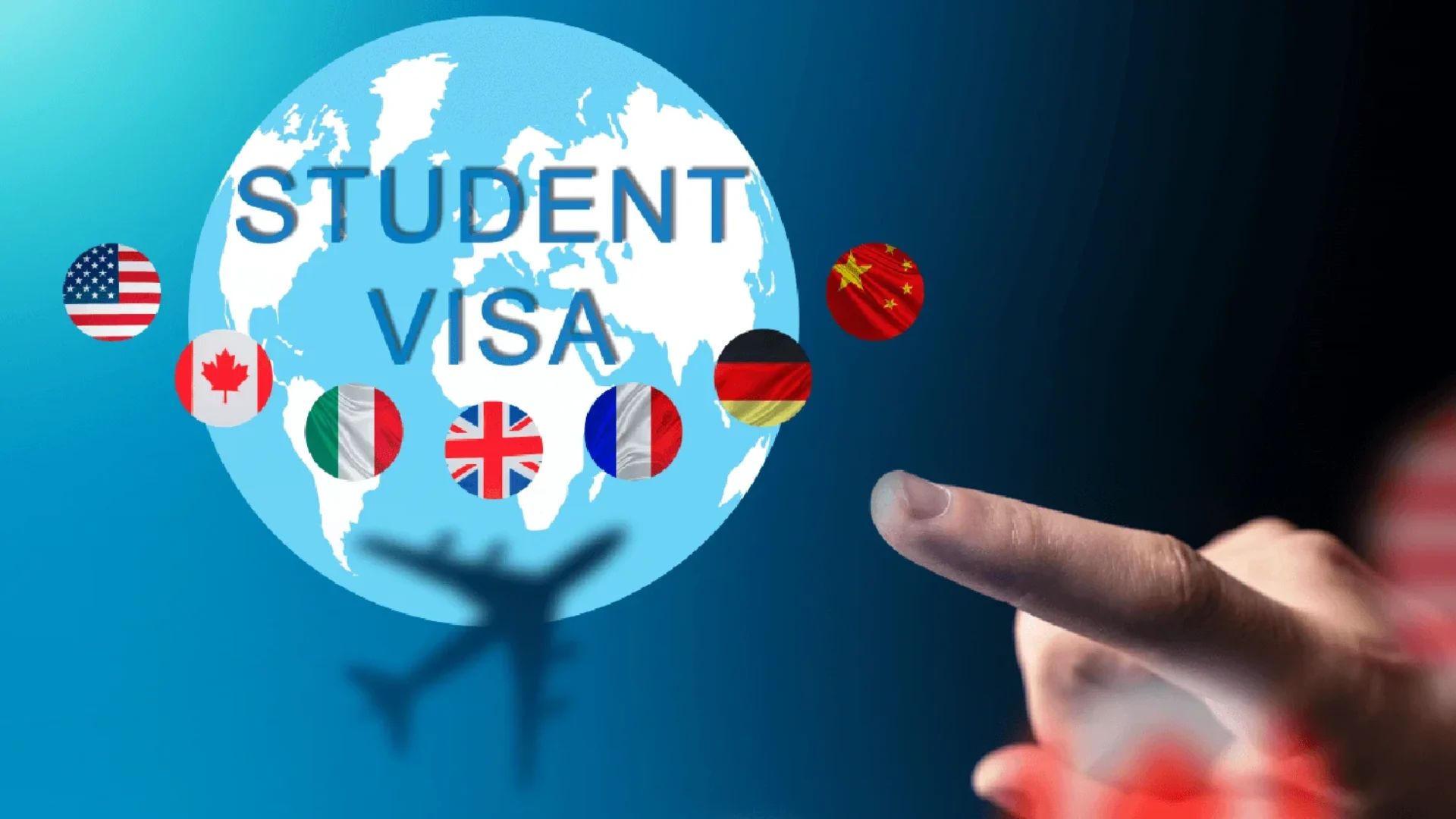
Getting into a university abroad is only half the journey. The student visa is the other half - and in 2026, it's the harder half. The US refused a majority of Indian F-1 applications last year, Canada has capped study permits, and the UK has tightened its financial checks. Meanwhile, Germany approves most complete applications in days.
The difference between approval and rejection is rarely academic merit. It's documentation, funding proof and preparation. This guide walks you through student visa requirements, documents, fees, processing times and interview preparation for every major destination - Canada, the UK, Australia, Germany, the USA, Ireland, New Zealand, France, Italy and the UAE. It's the framework we use at DU Global to prepare study abroad visa applications end to end.
What do you need for a student visa?
Every student visa application needs a valid passport, an official admission letter (offer letter, CAS, CoE or I-20 depending on country), proof of funds covering tuition and living costs, English test scores (IELTS/TOEFL/PTE), academic transcripts, a Statement of Purpose, visa fee payment and, for most countries, biometrics. Some countries also require an interview or health insurance.
What Is a Student Visa?
A student visa (also called a study visa, study permit or education visa, depending on the country) is official permission to enter a country and stay there for the duration of a full-time academic program. It is tied to your enrolment: it exists because a recognised institution has admitted you, and it usually ends shortly after your course does.
What an international student visa typically allows:
- Full-time study at the institution named in your application
- Part-time work - commonly around 20–24 hours per week during term (varies by country)
- Travel in and out of the country during validity (check re-entry rules)
- A pathway to post-study work permits after graduation in most major destinations
What it doesn't allow: full-time work during term, switching institutions without notifying immigration authorities, or overstaying after your course ends.
Who Needs a Student Visa?
Indian passport holders need a visa for studying abroad in every major destination - Canada, the UK, Australia, the USA, Germany, Ireland, New Zealand, France, Italy and the UAE all require one before travel. There are no visa-on-arrival study options.
You'll typically need a student visa (rather than a visitor visa) if your course:
- Lasts longer than 90 days (short courses can sometimes run on visitor visas - check the specific country)
- Is full-time at a school, college or university
- Leads to a degree, diploma or certificate
Parents and spouses don't automatically get to accompany you. Dependent visas exist in some countries but have tightened sharply - the UK now limits dependants to postgraduate research students, and Canada restricts spousal open work permits to specific programs. Verify the current dependant rules for your destination before planning family travel.
Types of Student Visas by Country
"Student visa" means a different document in each country. Knowing the correct name helps you find official information and fill the right forms:
| Country | Visa/Permit name | Key admission document |
|---|---|---|
| Canada 🇨🇦 | Study Permit | Letter of Acceptance (LOA) + Provincial Attestation Letter (PAL) |
| UK 🇬🇧 | Student visa (formerly Tier 4) | CAS - Confirmation of Acceptance for Studies |
| Australia 🇦🇺 | Subclass 500 | CoE - Confirmation of Enrolment |
| USA 🇺🇸 | F-1 (academic) / M-1 (vocational) | Form I-20 |
| Germany 🇩🇪 | National Visa (study purpose) | University admission letter + APS certificate |
| Ireland 🇮🇪 | Study Visa (D type) | Letter of acceptance |
| New Zealand 🇳🇿 | Fee Paying Student Visa | Offer of place |
| France 🇫🇷 | VLS-TS (long-stay student) | Campus France / EEF approval + admission |
| Italy 🇮🇹 | National Visa Type D (study) | Pre-enrolment via Universitaly portal |
| UAE 🇦🇪 | Student Residence Visa | University sponsorship |
Student Visa Requirements: The Universal Core
Formats differ, but every country's student visa eligibility checks come down to five questions. Your entire file exists to answer them:
- Are you a genuine student? A credible academic history, a logical course choice, and a Statement of Purpose that explains why this course, this university, this country. Australia formalises this as the Genuine Student (GS) requirement; every other country assesses it informally.
- Are you admitted? An unconditional offer from a recognised institution - LOA, CAS, CoE or I-20.
- Can you pay? Proof of funds for tuition plus living costs, from acceptable sources (savings, education loan, sponsor, scholarship).
- Can you study in the language of instruction? English language proficiency via IELTS, TOEFL, PTE or Duolingo English Test (or German/French tests where relevant). Requirements typically range from IELTS 6.0–7.0 overall depending on course level.
- Will you comply with visa conditions? A clean immigration record, ties to home, and no contradictions in your file.
Health requirements (medical exams, insurance like Australia's OSHC or the UK's health surcharge) and character requirements (police clearance for some countries) sit on top of these.
Student Visa Documents Checklist
The core student visa documents required across destinations:
| # | Document | Notes |
|---|---|---|
| 1 | Valid passport | Validity covering your full course length where possible |
| 2 | Admission letter | LOA / CAS / CoE / I-20 - the anchor document |
| 3 | Visa application form | Country-specific (e.g., DS-160 for the USA) |
| 4 | Passport photos | Per country specification |
| 5 | Proof of funds | Bank statements, education loan sanction letter, FD receipts, sponsor documents |
| 6 | Academic transcripts | 10th, 12th, degree marksheets and certificates |
| 7 | English test scores | IELTS / TOEFL / PTE / Duolingo, within validity |
| 8 | Statement of Purpose (SOP) | Your genuine-student narrative |
| 9 | Letters of Recommendation (LOR) | Where the university/visa process requires |
| 10 | Tuition payment proof | Receipts for deposits or first-year fees paid |
| 11 | Health insurance | OSHC (Australia), IHS payment (UK), private cover elsewhere |
| 12 | Medical exam results | Canada (upfront medical), Australia, NZ as required |
| 13 | Gap justification | Work experience letters covering any study gaps |
| 14 | Sponsor documents | Sponsor's ITRs, bank statements, relationship proof, affidavit of support |
Country-specific additions worth flagging:
- Canada: Provincial Attestation Letter (PAL) from your province, and a Guaranteed Investment Certificate (GIC) remains the cleanest way to show living funds
- Germany: APS certificate (mandatory academic verification for Indian applicants) and a blocked account (Sperrkonto)
- USA: SEVIS fee receipt (I-901) and DS-160 confirmation page
- France: Campus France EEF file number and interview completion
- UK: 28-day bank balance rule - funds must sit untouched at the required level for 28 consecutive days before you apply
Step-by-Step Student Visa Application Process
The student visa process follows the same skeleton everywhere. Here's the sequence to apply for a student visa, whichever destination you choose:
- Secure admission. Apply to universities 8–12 months before intake; accept an offer and pay the required deposit.
- Receive your visa-anchor document. CAS, CoE, I-20, LOA+PAL - this unlocks the visa application.
- Arrange your finances. Sanction the education loan, fund the blocked account/GIC, or consolidate sponsor documents. Do this before filling forms - funding proof has date rules.
- Pay pre-application fees where applicable (SEVIS fee for the USA, IHS for the UK).
- Complete the visa application form online - accurately mirroring your admission and financial documents.
- Pay the visa fee and book your biometric appointment (and interview slot, for the USA and France's Campus France stage).
- Attend biometrics/interview. Carry originals of everything.
- Complete medicals if required (Canada, Australia, NZ).
- Track and receive your decision - then check every detail on the visa/permit before booking final travel.
- Plan arrival. Most countries allow entry a set window before your course starts (e.g., up to 30 days early on a US F-1).
Timeline: From Admission to Arrival
Most rejected-for-deadline cases fail at planning, not paperwork. Working backwards from a September 2027 intake:
| When | Milestone |
|---|---|
| Sep–Dec 2026 | Shortlist universities, take IELTS/TOEFL, prepare SOP/LORs |
| Jan–Mar 2027 | Submit university applications |
| Mar–May 2027 | Receive offers, accept, pay deposit |
| May–Jun 2027 | Education loan sanction / blocked account / GIC funding |
| Jun–Jul 2027 | Receive CAS/CoE/I-20/PAL → file the visa application |
| Jul–Aug 2027 | Biometrics, interview, medicals, decision |
| Aug–Sep 2027 | Book flights, arrange student accommodation, fly |
The single most protective habit: file your visa the week your anchor document arrives. Every buffer week you bank absorbs a processing delay later.
Student Visa Fees (Country-Wise, 2026)
| Country | Visa fee | Major additional costs |
|---|---|---|
| Canada | CAD 150 (≈ ₹10,300) | Biometrics CAD 85; GIC funding CAD 22,895 |
| UK | £524 (≈ ₹66,000) | Immigration Health Surcharge ≈ £776/year of study |
| Australia | AUD 2,000 (≈ ₹1.34 lakh) | OSHC health cover; medicals |
| USA | $185 MRV + $350 SEVIS = $535 (≈ ₹50,000) | Possible additional visa integrity fee per current US policy |
| Germany | €75 (≈ ₹8,200) | Blocked account funding €11,904/year |
| Ireland | €60 single / €100 multi (≈ ₹6,600–11,000) | Medical insurance |
| New Zealand | ≈ NZD 750 (≈ ₹41,000) | Medicals, funds transfer |
| France | ≈ €50–99 + Campus France fee | VLS-TS validation after arrival |
| Italy | €50 (≈ ₹5,500) | Regional health enrolment after arrival |
| UAE | Varies by emirate/university (≈ ₹25,000–70,000) | University processes the residence visa |
INR conversions are approximate mid-2026 figures; fees are set in local currency and most are non-refundable. Australia's fee was raised to AUD 2,000 in mid-2025 - the highest student visa fee in the world - so budget for it early.
Note the real cost driver isn't the visa fee - it's the funding proof: the UK's 28-day maintenance balance, Canada's CAD 22,895 cost-of-living requirement plus first-year tuition, Germany's €11,904 Sperrkonto. Plan these amounts months ahead.
Student Visa Processing Time
Student visa processing time varies more by season than by country - June–August files everywhere sit in the year's longest queues.
| Country | Typical processing (India, 2026) |
|---|---|
| Germany | As fast as 1–2 weeks for complete APS-verified files |
| UK | 3 weeks standard (priority options available) |
| USA | Interview wait varies by consulate + ~1 week post-interview; start early |
| Australia | 4–6 weeks typical; can stretch to 10–12 |
| Ireland | 4–8 weeks |
| New Zealand | 4–8 weeks |
| Canada | 8–16 weeks - the longest of the major destinations |
| France | 2–4 weeks after Campus France stage |
| Italy | 1–3 weeks after pre-enrolment |
| UAE | 2–4 weeks via the sponsoring university |
Golden rule: apply the day you're eligible, never the day you're comfortable.
Country Comparison: Canada vs UK vs Australia vs Germany vs USA
The five most-searched destinations for Indian students, compared on what actually matters in 2026:
| Factor | Canada | UK | Australia | Germany | USA |
|---|---|---|---|---|---|
| Visa fee | CAD 150 | £524 + IHS | AUD 2,000 | €75 | $535 |
| Funding proof | CAD 22,895 + tuition | £1,529/mo London, £1,171 outside (9 months, 28-day rule) | ~AUD 29,710/yr living costs | €11,904 blocked account | Full I-20 amount |
| Interview | No (SOP-based) | Rarely (credibility interviews possible) | No (GS statement) | Sometimes | Yes - mandatory |
| Processing | 8–16 weeks | ~3 weeks | 4–6 weeks | 1–2 weeks | Interview-slot dependent |
| Climate for applicants (2026) | Capped, selective | Tightened but structured | Genuine Student scrutiny | Most welcoming | Highest refusal rates |
| Part-time work | 24 hrs/week | 20 hrs/week | 48 hrs/fortnight | 140 full days/yr | On-campus 20 hrs/week |
| Post-study work | PGWP up to 3 years | Graduate Route 2 years* | Subclass 485, 2–3 years | 18-month job-seeker permit | OPT 1 year (+2 STEM) |
| Tuition (typical/yr) | CAD 20–40k | £15–35k | AUD 30–45k | €0 at public universities | $25–60k |
UK Graduate Route: applications made on or before 31 December 2026 get 2 years; from 1 January 2027 it drops to 18 months (PhD graduates keep 3 years). If you're finishing a UK course in late 2026, this deadline matters.
The honest 2026 read: Germany offers the best approval odds and cost economics if your profile fits (APS, blocked account, often German for some programs). The UK is predictable and fast if you can evidence funds correctly. Canada and Australia reward strong, genuine files but scrutinise intent hard. The USA remains the top academic brand with the toughest visa gate - apply early and prepare the interview seriously.
Student Visa Interview Tips
The USA requires an interview for every F-1 applicant; the UK, Canada and Australia may call credibility interviews. In 2026, US interviews are short - often under two minutes - which means every answer must land.
What officers actually probe:
- Course logic: Why this program, why this university, why not in India? Know your course structure, not just its name.
- Funding credibility: Who is paying, from what income, and does it match the I-20/CAS figures exactly? Rehearse the numbers.
- Post-study intent: Have a clear, honest answer about your plans. Memorised "I will return to India" scripts sound like scripts.
- Consistency: Your spoken answers must match your DS-160/application. Contradictions end interviews.
Practical prep: do 2–3 mock interviews aloud, carry documents organised in the order you'd need them, answer only what's asked, and never argue with the officer. If refused under 214(b) (USA), you can reapply - but only a materially changed application changes the outcome.
Common Reasons for Student Visa Rejection
Across all destinations, the same failures recur:
- Weak or inconsistent proof of funds - balances that appeared last week, sponsor income that can't support the pledge, loan sanction letters missing disbursement terms
- Unconvincing genuine-student case - a career switcher with no explanation, a course below your existing qualification, an SOP copied from templates
- Unexplained study gaps - gaps are fine; undocumented gaps are not
- Low or expired English test scores - or scores below the level your CAS/CoE states
- Document mismatches - different fund figures across forms, name spellings that vary between documents
- Poor interview performance (USA especially) - vague funding answers, weak course knowledge
- Wrong or incomplete forms - an unfilled DS-160 field, a missed PAL, an unpaid SEVIS fee
- Immigration history issues - prior refusals concealed instead of explained
A refusal on record makes the next application harder everywhere - one more argument for getting the first file right.
How to Increase Your Student Visa Approval Chances
- Start 10–12 months before intake. Almost every rejection risk shrinks with time.
- Build the money trail early. Season your accounts, sanction the loan before visa filing, and document every large credit's source.
- Write an SOP only you could write. Specific modules, specific faculty, specific career logic. Officers read thousands of templates; specificity is the signal.
- Match every number across every document. The I-20/CAS figure, the bank letter, the loan sanction, the interview answer - one figure, everywhere.
- Explain gaps and switches proactively with employment letters or a short addendum, before the officer has to wonder.
- Choose the destination that fits your profile, not just the ranking. A borderline file that would struggle at a US consulate may sail through Germany or Ireland.
- Get a professional file review before submission. Students can consultDU Global for a document-by-document check against the current checklist of their destination country - most refusals we see trace to a single fixable inconsistency.
Post-Study Work Options After Your Student Visa
For most Indian students, the post-study work visa is part of the return-on-investment math:
- Canada - PGWP: Up to 3 years depending on program length and current eligibility rules (field-of-study conditions now apply to some programs)
- UK - Graduate Route: 2 years if you apply by 31 Dec 2026; 18 months thereafter; 3 years for PhDs; no sponsor needed
- Australia - Subclass 485: Typically 2–3 years depending on qualification level
- Germany - 18-month job-seeker residence permit, converting to an EU Blue Card once you land a qualifying job
- USA - OPT: 12 months, plus a 24-month STEM extension for eligible degrees
- Ireland - Stamp 1G: Up to 2 years for postgraduates
- New Zealand - Post-Study Work Visa: Up to 3 years for eligible qualifications
These rules shift frequently - verify the current version on the official immigration site of your destination before you commit, and factor the post-study pathway into your country choice, not as an afterthought.
Best Countries for Indian Students in 2026
There's no universal "best" - there's the best fit for your budget, field and risk tolerance:
- Best approval odds + lowest cost: Germany (tuition-free public universities, fast processing, strong approvals for complete files)
- Fastest, most predictable process: UK (3-week standard processing, transparent rules)
- Best post-study runway: Canada (PGWP up to 3 years) and New Zealand - if your file clears today's stricter genuine-intent bar
- Best academic brand + research funding: USA - for strong profiles willing to prepare rigorously for the interview
- Balanced quality-of-life pick: Australia and Ireland
- Rising alternatives: France and Italy (low fees, growing English-taught programs), and the UAE for proximity, safety and emerging university campuses
HowDU Global Can Help
Applying to one university is a project; managing admission, funding proof, and a visa file across country-specific rules is a system. DU Global provides end-to-end student visa guidance: destination and course shortlisting, SOP and documentation review, financial-proof structuring (loans, blocked accounts, GIC), application filing, and interview preparation - with offices across India and the Gulf for students applying from either market. If your intake is less than six months away, start now.
Related guides
Frequently Asked Questions
What are the requirements for a student visa?
Core student visa requirements everywhere: a valid passport, an admission letter from a recognised institution (CAS, CoE, I-20 or LOA), proof of funds for tuition and living costs, English proficiency scores (IELTS/TOEFL/PTE), academic transcripts, a Statement of Purpose and the visa fee. Health insurance, medicals and interviews apply in specific countries.
How much bank balance is required for a student visa?
It's country-specific, not a single figure: Canada requires CAD 22,895 in living funds plus first-year tuition; the UK requires £1,529/month (London) or £1,171/month (elsewhere) for up to 9 months, held for 28 consecutive days; Germany requires €11,904 in a blocked account; Australia expects roughly AUD 29,710/year in living costs. Education loans and sponsors count if properly documented.
How long does student visa processing take?
In 2026, typical times from India: Germany 1–2 weeks, UK about 3 weeks, France and Italy 2–4 weeks, Australia 4–6 weeks, Ireland and New Zealand 4–8 weeks, Canada 8–16 weeks. US timelines depend on interview slot availability at your consulate. Apply the moment you're eligible.
What is the student visa fee for Indian students?
As of 2026: Canada CAD 150, UK £524 plus health surcharge, Australia AUD 2,000, USA $535 ($185 MRV + $350 SEVIS), Germany €75, Ireland €60, Italy €50, New Zealand about NZD 750. Fees are paid in local currency and are generally non-refundable if refused.
Can I work on a student visa?
Yes, within limits: Canada allows 24 hours/week off-campus during term, the UK 20 hours/week, Australia 48 hours per fortnight, Germany 140 full working days per year, and the USA restricts F-1 students to on-campus work (20 hours/week) unless authorised via CPT/OPT. Full-time work is allowed during official vacations in most countries.
Do I need IELTS for a student visa?
You need to prove English proficiency, but IELTS is one option among several - TOEFL, PTE Academic and the Duolingo English Test are widely accepted, and some universities waive testing for students with English-medium education. The visa authority generally accepts whatever your admitting university accepted, though minimum score rules apply in the UK and Australia.
Why do student visas get rejected?
The top reasons: insufficient or inconsistent proof of funds, an unconvincing genuine-student case, unexplained academic gaps, document mismatches across forms, low English scores, poor interview performance (USA), and concealed prior refusals. Most rejections are documentation failures, not judgments on academic ability.
Can I apply for a student visa without an admission letter?
No. The admission document - LOA, CAS, CoE or I-20 - is the anchor of every student visa application. You must be unconditionally admitted (and in Canada's case, also hold a Provincial Attestation Letter) before you can file.
What is a Statement of Purpose for a visa?
An SOP is a 1–2 page essay explaining your academic background, why you chose this course, university and country, how you'll fund your studies, and your plans after graduation. Visa officers use it to assess genuine student intent - specificity and honesty matter more than impressive vocabulary.
Can my spouse or parents come with me on a student visa?
Only under specific dependant rules, which tightened in 2024–2026: the UK limits dependants to postgraduate research students and government-sponsored scholars; Canada restricts spousal open work permits to spouses of students in certain graduate and professional programs. Parents generally need their own visitor visas. Check current rules before planning.
What happens after my student visa is approved?
Verify every detail on the visa (name, course dates, conditions), book travel within the permitted entry window (e.g., up to 30 days before course start for the US), arrange accommodation and insurance, carry your admission and financial documents in hand luggage for border checks, and complete any post-arrival steps - like validating a French VLS-TS or collecting a Canadian study permit at the port of entry.
Is it better to apply through a consultant or on my own?
You can absolutely apply on your own - official government portals are the source of truth. A consultant adds value in three places: catching document inconsistencies before submission, structuring financial proof correctly, and interview preparation. If your case has complications (gaps, prior refusals, sponsor funding), professional review meaningfully lowers risk.
Conclusion
A student visa is won on paper months before it's granted. Start 10–12 months out, build a funding trail that tells one consistent story, write an SOP only you could write, and file the day your admission documents allow. The 2026 environment is tougher in North America and more welcoming in Europe - but in every country, complete and consistent files get approved every day.
If you'd rather not navigate ten countries' rules alone,DU Global's counsellors provide personalised student visa guidance from shortlisting to boarding - book a free consultation and start your application with a checklist built for your exact destination and intake.
Book a Free Consultation
Have questions? Fill out the form and our experts will get in touch.
Related Posts

Unique Experiences For You in Georgia To Make Your Trip Unforgettable
Schengen Visa Requirements 2026: Documents & Checklist
Visa Validity Check Online: How to Check Your Visa Status
Visa Requirements: Complete Guide for International Travelers
UAE Golden Visa Rumours: What's True & False in 2026







Leave a Reply
Required fields are marked *