
Schengen Visa Requirements 2026: Documents & Checklist
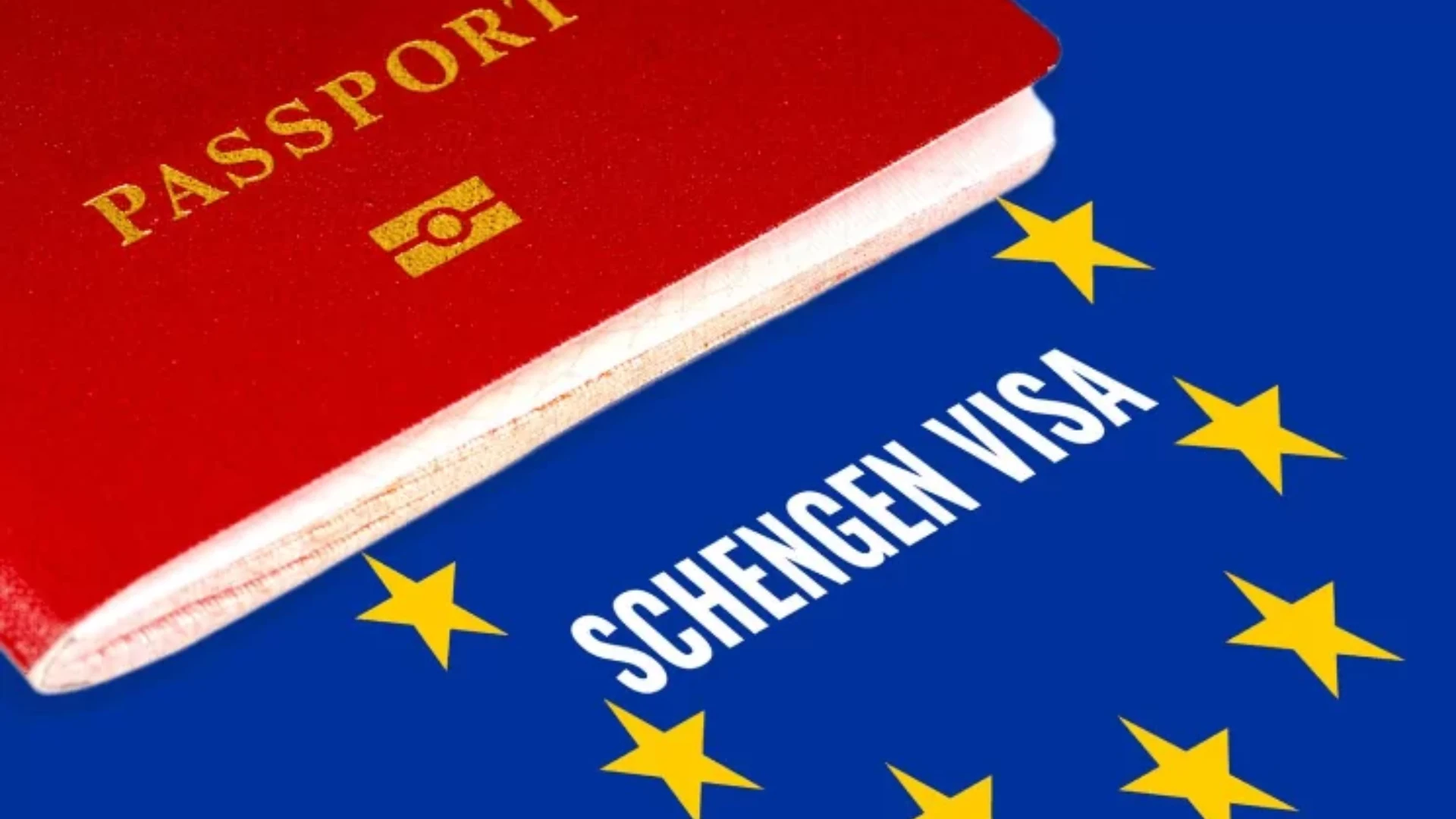
Planning a trip to Europe? Before you book anything, get one thing right: the Schengen visa requirements. Most rejections have nothing to do with eligibility - they happen because of a missing bank statement, a photo that doesn't meet specifications, or an insurance policy with the wrong coverage amount.
This guide covers everything Indian passport holders (and Indian expats in the UAE and other GCC countries) need in 2026: the full document checklist, minimum bank balance guidance, photo specifications, fees, processing times, and the new EU border rules that took effect this year. At DU Global, we help thousands of travellers prepare accurate Schengen visa applications every year - and this guide is built from what actually gets files approved.
What are the Schengen visa requirements?
To get a Schengen visa, you need a passport valid for 3+ months beyond your return date, a completed application form, two recent photos (35×45 mm), travel insurance with €30,000 medical coverage, confirmed flight itinerary, proof of accommodation, bank statements for the last 3–6 months, and proof of employment or income. Biometrics are mandatory.
What Is a Schengen Visa?
A Schengen visa is a short-stay visa (officially a Type C visa) that lets you travel freely across 29 European countries with a single document. Once you enter through any Schengen Area country, there are no internal border checks between member states - one visa covers France, Germany, Italy, Spain, Switzerland, the Netherlands, Greece and 22 others.
Key facts at a glance:
| Feature | Detail |
|---|---|
| Visa type | Type C (short stay) |
| Countries covered | 29 (25 EU states + Iceland, Norway, Switzerland, Liechtenstein) |
| Maximum stay | 90 days in any 180-day period |
| Purposes allowed | Tourism, business, family visit, short courses, medical treatment |
| Work permitted? | No - a Schengen tourist visa never allows employment |
| Where to apply | Embassy/consulate of your main destination, usually via VFS Global |
A short-stay visa does not cover working in Europe, studying for longer than 90 days, or long-term relocation. Those need national (Type D) visas issued by the individual country.
Schengen Visa Eligibility: Who Needs to Apply
Indian passport holders always need a visa to enter the Schengen Area - there is no visa-on-arrival or e-visa option for Europe. The same applies to citizens of Pakistan, Bangladesh, Sri Lanka, Nepal, the Philippines and most GCC-resident expat nationalities.
You meet the basic Schengen visa eligibility criteria if you can demonstrate:
- A genuine, temporary purpose - tourism, a business meeting, visiting family, attending an event
- Sufficient funds for the entire trip (covered in detail below)
- Strong ties to your home country - a job, business, family or property you'll return to
- A clean immigration history - no overstays or serious visa violations
- Valid travel insurance and confirmed travel plans
One common misconception: eligibility isn't about how wealthy you are. Consulates approve modest, well-documented applications every day and reject high-balance files that look inconsistent. The file has to tell one coherent story.
Note for GCC residents: If you're an Indian citizen living in Dubai, Riyadh or Doha, you apply in your country of residence, not in India. You'll need a valid residence permit (Iqama/Emirates ID) with at least 3 months' validity beyond your return date.
Schengen Visa Documents Required: Complete Checklist
Here is the full Schengen visa document checklist for a tourist application from India. Every item matters - VFS Global accepts incomplete files, but the consulate will refuse them.
| # | Document | Specification |
|---|---|---|
| 1 | Visa application form | Filled online or in ink, signed on all required pages |
| 2 | Passport | Issued within 10 years, valid 3+ months after return, 2 blank pages |
| 3 | Old passports | All previous passports showing travel history |
| 4 | Photographs | 2 recent photos, 35×45 mm, white background (full specs below) |
| 5 | Travel insurance | Minimum €30,000 medical coverage, valid across all Schengen states |
| 6 | Flight itinerary | Confirmed round-trip reservation (don't buy a non-refundable ticket yet) |
| 7 | Proof of accommodation | Hotel bookings for every night, or a host's invitation letter |
| 8 | Bank statements | Last 3–6 months, stamped by the bank, showing healthy activity |
| 9 | Income Tax Returns | Last 2–3 years (ITR-V acknowledgements) |
| 10 | Employment proof | Employment letter + approved leave letter + last 3 salary slips |
| 11 | Cover letter | One page explaining purpose, itinerary and funding (sample below) |
| 12 | Travel itinerary | Day-wise plan showing cities and dates |
| 13 | Civil documents | Marriage certificate (couples), birth certificates (minors) |
Category-specific additions:
- Self-employed: Business registration/GST certificate, company bank statements, business ITRs
- Business visa: Invitation letter from the European company, trade licence, employer sponsorship letter
- Family visit visa: Host's invitation letter, copy of their passport/residence permit, proof of relationship, and a sponsorship letter with proof of funds if they're covering costs
- Students: School/college NOC, bonafide certificate, parents' financial documents
- Minors: Consent letter from both parents (notarised if travelling with one parent or alone)
- Retired applicants: Pension statements, fixed deposit proof
Requirements are broadly standardised across the Schengen Area, but each embassy publishes its own checklist with small variations - Germany, for instance, is stricter about document order, while the Netherlands asks for specific proof of return. Always cross-check the checklist of the specific consulate you're applying to, or have a professional review your file. DU Global maintains updated, country-specific Schengen visa checklists for exactly this reason.
Schengen Visa Passport Requirements
Your passport must satisfy three separate rules, and missing any one is grounds for refusal:
- Issued within the last 10 years on your date of entry into the Schengen Area
- Valid for at least 3 months beyond your planned departure date from Schengen
- At least 2 blank visa pages available
Practical advice: if your passport has less than a year of validity left, renew it before applying. Consulates cap visa validity at your passport's expiry - a short passport can turn a potential multi-year visa into a two-week one.
Schengen Visa Photo Requirements
Photos are the most avoidable rejection trigger. The specifications:
- Size: 35 mm × 45 mm
- Background: Plain white or light grey
- Face coverage: 70–80% of the frame, looking straight at the camera
- Recency: Taken within the last 6 months (and visibly different from your passport photo if that's older)
- Finish: Matte or semi-matte, printed on quality photo paper
- Expression: Neutral, mouth closed, eyes open and clearly visible
- Not allowed: Glasses with glare or tinted lenses, headwear (except religious, with full face visible), shadows, filters, selfies
Tell the studio it's for a "Schengen visa" - most Indian photo studios know the format. Carry two identical copies.
Schengen Visa Travel Insurance Requirements
Schengen travel insurance is mandatory, and the consulate checks the policy certificate line by line. Your policy must have:
- Minimum coverage of €30,000 for medical emergencies
- Coverage for emergency treatment, hospitalisation and medical repatriation
- Validity across the entire Schengen Area (the certificate should say "Schengen countries" or "worldwide")
- Coverage for your full travel dates - ideally with a 2–3 day buffer on each side
Policies from major Indian insurers cost roughly ₹500–₹1,500 per week of travel depending on age and coverage. Buy a refundable policy where possible, so you're not out of pocket if the visa is refused. If you hold a multiple-entry visa, you only need insurance covering your first trip at application time - but you must be insured for every subsequent visit too.
Schengen Visa Financial Requirements: How Much Bank Balance Do You Need?
This is the question we're asked most, so let's be precise. There is no single official "minimum bank balance" published for Indian applicants. Each Schengen state defines a daily subsistence amount - for example, Germany's reference figure is around €45 per day - and the consulate checks whether your funds comfortably cover your trip cost plus your life back home.
As practical guidance, here's what a comfortable file looks like by trip length:
| Trip duration | Estimated trip cost (mid-range) | Comfortable closing balance |
|---|---|---|
| 5–7 days | ₹1.2–1.8 lakh | ₹2.5–3.5 lakh |
| 10–14 days | ₹2–3 lakh | ₹4–5 lakh |
| 15–21 days | ₹3–4.5 lakh | ₹5.5–7 lakh |
| Family of 4, 10 days | ₹6–9 lakh (combined) | ₹10–14 lakh (combined) |
These are planning benchmarks based on application experience, not official thresholds. A shoestring itinerary with hostels needs less; a luxury itinerary needs more.
What consulates actually scrutinise in your Schengen visa bank balance requirements:
- Consistency: Six months of regular salary credits beat a large balance that appeared last week
- No sudden lump-sum deposits - an unexplained ₹3 lakh credit two weeks before applying is a classic red flag; if funds were genuinely moved (FD maturity, family transfer), document the source
- Activity, not just balance: A living, breathing account with routine transactions
- Supporting wealth: Fixed deposits, mutual fund statements and property papers strengthen the file, though your savings account does the heavy lifting
If a family member or host is sponsoring you, include their sponsorship letter, their bank statements, and proof of relationship - your own account still shouldn't be empty.
Schengen Visa Cover Letter (With Sample)
The cover letter is your file's one-page summary - the first thing many visa officers read. Keep it factual, specific and under a page.
Sample structure:
To: The Visa Officer, Consulate General of [Country], [City] Subject: Schengen tourist visa application - [Your Name], Passport No. [XXXXXX]
Dear Sir/Madam,
I am [Name], working as [Designation] at [Company] in [City] since [Year]. I am writing to apply for a short-stay Schengen visa to visit [Country/Countries] from [date] to [date] for tourism.
My planned itinerary: [2–3 lines - cities, dates, key plans]. I have attached confirmed flight reservations, hotel bookings for all nights, and travel insurance with €30,000 coverage.
I will fund this trip entirely from my own savings. My salary is ₹[X] per month, and my enclosed bank statements and income tax returns reflect my financial position. My employer has approved my leave from [date] to [date], confirmed in the attached letter, and I will resume duties on [date].
I confirm that I will abide by all visa conditions and return to India before my visa expires. Kindly find all supporting documents enclosed.
Sincerely, [Name, signature, phone, email]
Adapt it honestly - never claim an employer, salary or itinerary that documents elsewhere in your file contradict. Officers cross-check.
Schengen Visa Application Process: Step by Step
The Schengen visa application process from India runs through VFS Global for most countries. Here's the sequence:
- Choose the right country to apply to. Apply to your main destination - where you'll spend the most nights. Equal nights? Apply to your first port of entry. (Applying to a "easier" country you barely visit is a rejection risk.)
- Fill the visa application form on the country's official portal or VFS website. Answer exactly as your documents show.
- Book your VFS/embassy appointment. In peak season (April–June, September–December), slots in Delhi, Mumbai and Bengaluru fill weeks ahead - book early.
- Assemble your documents in the embassy's prescribed order, with photocopies.
- Attend the appointment and give biometrics. Fingerprints and a photo are captured; biometrics stay valid for 59 months, so repeat applicants within 5 years may skip this step.
- Pay the visa fees (embassy fee + VFS service charge) at the centre.
- Track your application via the VFS reference number.
- Collect your passport - by courier or in person. Check the visa sticker immediately for name spelling, dates and number of entries.
When to apply: You can submit up to 6 months before travel and no later than 15 working days before departure. For a summer Europe trip, applying 8–12 weeks ahead is the sweet spot.
Schengen Visa Fees in 2026
| Component | Amount |
|---|---|
| Embassy fee - adult | €90 (≈ ₹8,200–9,100, paid in INR at the day's rate) |
| Embassy fee - child 6–11 years | €45 |
| Child under 6 | Free |
| VFS Global service fee (India) | ₹1,933–₹3,111 depending on country (revised Nov 2025) |
| Travel insurance | ₹500–₹1,500 per week |
| Realistic total per adult | ₹11,000–₹15,000 |
Both the embassy fee and the VFS charge are non-refundable, even if your visa is refused - which is the financial argument for getting the file right the first time. Optional VFS add-ons (courier, SMS, premium lounge) are exactly that: optional.
Schengen Visa Processing Time by Country
The standard Schengen visa processing time is 15 calendar days, extendable to 45 days if the consulate needs additional scrutiny or documents. Real-world timelines from Indian application centres vary by country and season:
| Country | Typical processing (India, 2026) |
|---|---|
| Germany | 10–15 working days |
| France | 7–15 working days (often faster off-season) |
| Netherlands | 10–15 working days |
| Switzerland | 7–12 working days |
| Italy | 12–20 working days in peak season |
| Spain | 12–20 working days in peak season |
| Greece, Portugal | 15–25 working days in peak season |
Treat these as planning estimates, not guarantees - a file referred for extra checks can take the full 45 days regardless of country. Never book non-refundable flights until the visa is in hand.
Single-Entry vs Multiple-Entry Schengen Visa
| Feature | Single-entry visa | Multiple-entry visa (MEV) |
|---|---|---|
| Entries allowed | One - exit ends the visa | Unlimited within validity |
| Typical validity | Trip dates + small buffer | 6 months to 5 years |
| Best for | First-time travellers | Frequent travellers |
| Stay limit | As granted | 90 days per 180-day window |
| Fee | €90 | €90 (same fee - better value) |
The cascade rule - how Indians get 2- and 5-year visas. Since April 2024, the EU applies a favourable "cascade" regime to Indian nationals applying from India: obtain and lawfully use two Schengen visas within three years, and you become eligible for a 2-year multiple-entry visa. Use that cleanly, and the next step is normally a 5-year visa (passport validity permitting). If you qualify, say so explicitly - request multi-year validity in your cover letter and include copies of your previous visas and entry/exit records. Frequent business travellers can sometimes qualify for long-validity MEVs directly by demonstrating an established need to travel.
The 90/180 Rule Explained (With an Example)
Every short-stay visa - single or multiple entry - is governed by the 90/180 rule: you may stay at most 90 days within any rolling 180-day window.
The word "rolling" trips people up. It's not a calendar reset. On any day you're in the Schengen Area, look back 180 days: your total days present in that window must not exceed 90.
Example: Priya holds a 2-year MEV. She spends 60 days in Europe from 1 March to 29 April. She flies home. Can she return on 1 June for another 45 days? No - on day 45 of that second trip (mid-July), her trailing 180-day window would still contain most of the March–April stay, pushing her past 90 days. She'd need to wait until enough March–April days "age out" of the window. The EU's official short-stay calculator does this math for you - use it before booking.
Since 2026, this rule isn't just theoretical: it's automatically enforced at the border.
What's New in 2026: EES, Digital Borders and ETIAS
Three changes every applicant should know this year:
- The Entry/Exit System (EES) is fully live. Since 10 April 2026, all 29 Schengen countries digitally record every non-EU traveller's entry and exit - passport stamps are gone. Your fingerprints and facial image are captured at the border (yes, again, even though you gave biometrics at VFS - these are separate systems), and your 90/180 count is calculated automatically. Overstays are flagged instantly, so the days of "the officer didn't notice" are over. Budget extra time at immigration on your first EES-registered trip.
- ETIAS does not apply to Indians. You'll see headlines about ETIAS launching in late 2026 - it's a travel authorisation for visa-exempt nationalities (Americans, British, Japanese, etc.). Indian citizens need a full Schengen visa, so ETIAS changes nothing for you.
- Digital visas are coming. The EU is phasing in barcode-based digital visas to replace passport stickers, and the India–EU mobility discussions signed in early 2026 point toward more online processing. The document requirements in this guide remain unchanged.
Europe Schengen Visa Requirements from the UAE and GCC
For the millions of Indians living in the Gulf, the process is similar but with three key differences:
- Apply where you live. UAE, Saudi, Qatar, Oman, Kuwait and Bahrain residents apply through VFS/BLS centres in their country of residence - Dubai, Abu Dhabi, Riyadh, Doha and so on - not in India.
- Residence permit rules. Your Emirates ID / Iqama / residence permit must generally be valid for at least 3 months beyond your return from Europe. A visa application on a residence permit close to expiry invites refusal.
- Local documentation. Salary certificates (attested where required), local bank statements in AED/SAR/QAR, and an NOC from your GCC employer replace the Indian equivalents. GCC salary structures and banking patterns are familiar to consulates there - but your file must still show ties to your country of residence.
Fees are the same €90 equivalent in local currency, and processing times from Dubai and Abu Dhabi are often slightly faster than peak-season India. DU Global's offices across India and the Gulf handle applications in both markets, which helps families applying from two countries for the same trip keep their files consistent - a detail consulates genuinely notice.
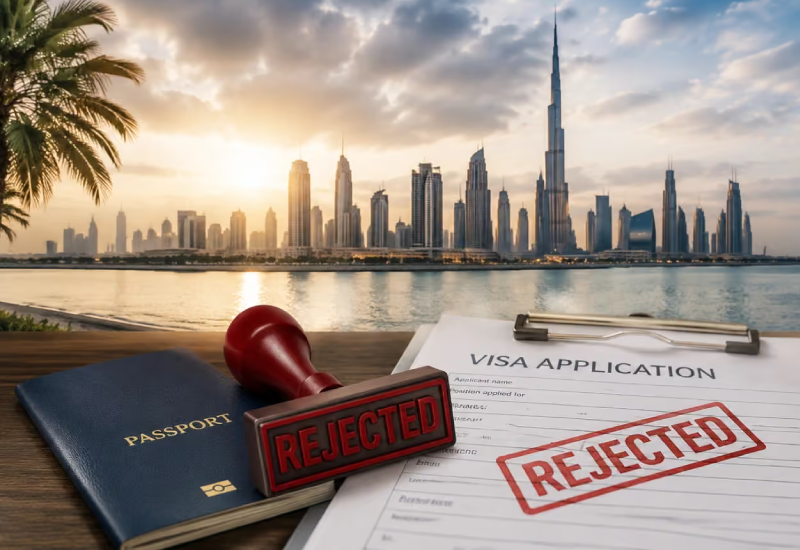
Common Schengen Visa Rejection Reasons
Refusal letters cite standard grounds. The most frequent, in practice:
- Insufficient or inconsistent funds - low balance, sudden deposits, statements that don't match stated income
- Doubtful purpose of travel - vague itinerary, unbooked accommodation, a cover letter that contradicts the documents
- Weak ties to home country - no job letter, no evidence you'll return; the officer must be convinced you'll leave before the visa expires
- Invalid or inadequate travel insurance - coverage below €30,000, wrong dates, or not Schengen-wide
- Passport problems - under 3 months' remaining validity or no blank pages
- Fake or dubious reservations - cancelled hotel bookings the consulate re-verifies, or dummy tickets from unreliable sources
- Incomplete application - missing signatures, absent ITRs, unfilled form fields
- Previous overstays or refusals left unexplained
A refusal isn't a ban. You can reapply immediately with a corrected file, or appeal within the deadline stated in your refusal letter (usually 15–30 days, varies by country). But since fees are non-refundable, prevention is cheaper than a second attempt.
Tips to Improve Your Approval Chances
- Apply to the country you're actually visiting most. Consulates check itineraries against the application.
- Keep your account healthy for 6 months before applying, not 6 days.
- Match every claim across documents. Same dates on flights, hotels, insurance and leave letter.
- Use refundable flight reservations and hotel bookings - real, verifiable, cancellable.
- Write a specific cover letter. "Visiting Paris, Lucerne and Rome over 12 days as per attached itinerary" beats "touring Europe."
- Show your travel history. Old passports with UK/US/Australia/Southeast Asia visas build credibility.
- If cascade-eligible, ask for a multi-year visa explicitly and attach previous Schengen visas.
- Don't over-stuff the file. A clean, ordered, complete file signals a credible traveller; fifty random pages signal a nervous one.
- Get the file reviewed before submission. A second pair of experienced eyes catches the small inconsistencies officers are trained to spot - this pre-submission review is the single most valuable service we provide at DU Global.
Final Pre-Submission Checklist
Print this and tick every box before your appointment:
- Application form complete and signed
- Passport: 10-year rule ✓, 3-month validity ✓, 2 blank pages ✓
- Old passports included
- 2 photos, 35×45 mm, white background, under 6 months old
- Insurance certificate: €30,000, Schengen-wide, correct dates
- Round-trip flight reservation
- Accommodation proof for every night
- Bank statements (3–6 months, bank-stamped)
- ITRs for 2–3 years
- Employment letter + leave approval + salary slips
- Cover letter, signed
- Day-wise travel itinerary
- Category extras (invitation letter, sponsorship letter, minor consent, business docs)
- Photocopies of everything
- Visa fee amount ready (INR, card/UPI accepted at major VFS centres)
Frequently Asked Questions
What are the Schengen visa requirements for Indian citizens?
Indian citizens need a valid passport (3+ months beyond return, issued within 10 years), a completed application form, two 35×45 mm photos, travel insurance with €30,000 coverage, confirmed flight and hotel reservations, 3–6 months of bank statements, income tax returns, employment proof and a cover letter. Biometrics are captured at a VFS Global centre.
How much bank balance is required for a Schengen visa?
There's no official minimum for Indian applicants. As a practical benchmark, maintain ₹2.5–3.5 lakh for a one-week trip and ₹4–5 lakh for two weeks, with 3–6 months of consistent account activity. Consulates assess whether funds credibly cover your stated trip - consistency matters more than a large last-minute deposit.
How long does Schengen visa processing take from India?
The standard processing time is 15 calendar days, extendable up to 45 days for additional checks. In practice, most files from India are decided within 7–20 working days depending on the country and season. Apply 8–12 weeks before travel during peak season.
What is the Schengen visa fee in 2026?
The embassy fee is €90 for adults (≈ ₹8,200–9,100), €45 for children aged 6–11, and free under 6. VFS Global's service fee in India adds ₹1,933–₹3,111 depending on the country. A realistic all-in budget is ₹11,000–₹15,000 per adult. Fees are non-refundable.
Which Schengen country is easiest to get a visa for?
Apply to your genuine main destination - "easy country" shopping is itself a rejection reason, because consulates check whether your itinerary matches your application. That said, approval rates and processing speeds vary by consulate and season; a well-prepared file is what actually determines the outcome.
Can I visit multiple countries on one Schengen visa?
Yes. One Schengen visa covers all 29 member countries with no internal border checks. Apply to the country where you'll spend the most nights; if nights are equal, apply to your first point of entry. You can then move freely between France, Italy, Switzerland, Germany and the rest.
What is the 90/180 rule?
You may stay a maximum of 90 days within any rolling 180-day period across the entire Schengen Area, regardless of visa validity. On any given day of your stay, your total days present during the previous 180 days must not exceed 90. Since April 2026, the EU's Entry/Exit System enforces this automatically.
Do I need to give biometrics again if I applied before?
Fingerprints given for a Schengen application remain valid for 59 months, so repeat applicants within 5 years usually skip biometric capture at VFS. However, the border EES registration (introduced in 2025–26) is a separate system - you'll provide fingerprints and a facial image at the border on your first EES-registered entry.
Can my Schengen visa application be rejected for travel insurance?
Yes, and it happens often. Your policy must cover at least €30,000 in medical emergencies, be valid across all Schengen states, and span your full travel dates. A policy that covers only one country, has lower coverage, or misses your dates is grounds for refusal.
What happens if my Schengen visa is rejected?
You receive a refusal letter stating the grounds. You can appeal within the deadline it specifies (typically 15–30 days, depending on the country) or simply reapply with a corrected, stronger file. Fees are not refunded, and the refusal is recorded - so address the stated reason honestly rather than reapplying with the identical file.
Is a Schengen visa interview mandatory?
For most tourist applications from India, there's no formal interview - you submit documents and biometrics at VFS Global. However, consulates can call any applicant for an interview or request additional documents, which is one reason processing can stretch to 45 days.
Can I extend my stay in Europe on a Schengen visa?
Only in exceptional cases - force majeure, serious medical grounds, or other compelling circumstances - and you must apply to the authorities of the country you're in before your permitted stay ends. Tourism is not a valid extension reason. Overstaying is now automatically flagged by the EES and can lead to fines and future bans.
Conclusion: Get the File Right the First Time
The Schengen visa requirements aren't difficult - they're exact. A valid passport, correct photos, €30,000 insurance, honest financials, confirmed bookings and a consistent story will get a genuine traveller approved. Nearly every refusal we see traces back to one avoidable gap: a stale bank statement, an insurance date mismatch, a cover letter that oversells.
Use the checklist above, apply 8–12 weeks early, and let the documents do the talking. And if you'd rather have specialists verify your file against the exact consulate checklist before you pay non-refundable fees, DU Global's visa experts review and prepare Schengen applications from India and across the GCC - book a consultation and travel with your paperwork sorted.
Book a Free Consultation
Have questions? Fill out the form and our experts will get in touch.
Related Posts

Unique Experiences For You in Georgia To Make Your Trip Unforgettable

Student Visa Guide 2026: Requirements, Process & Fees
Visa Validity Check Online: How to Check Your Visa Status
Visa Requirements: Complete Guide for International Travelers
UAE Golden Visa Rumours: What's True & False in 2026







Leave a Reply
Required fields are marked *