


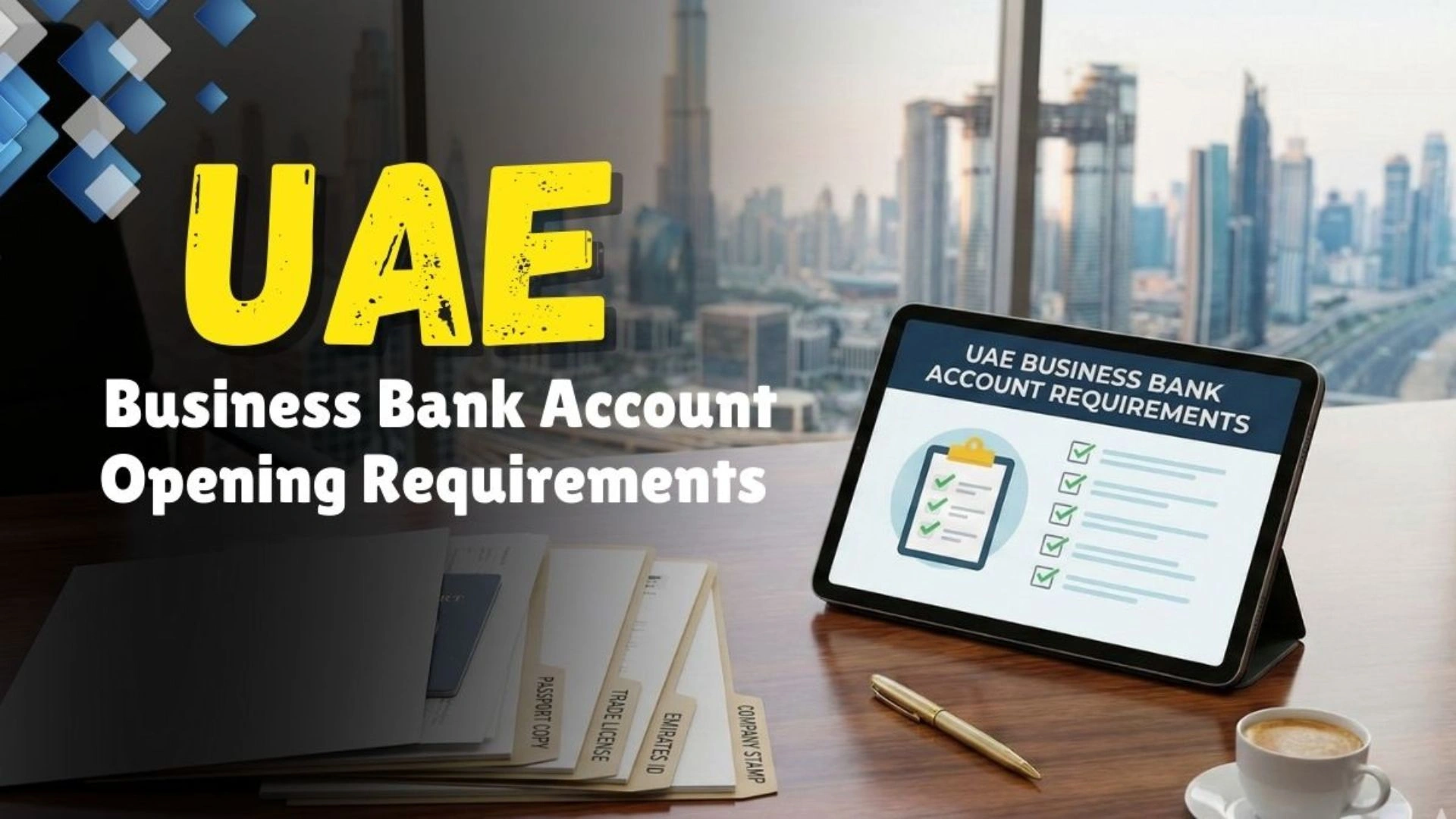
Setting up a business is only the first step in the UAE. You should also have a UAE corporate bank account to run your business. This account allows you to manage payments, receive revenue, and pay suppliers.
The process of opening a business account in the UAE may be time-consuming due to the stringent rules of compliance with the banks. UAE banks follow AML (Anti-Money Laundering) and KYC regulations. They scrutinize company information, business operations, and ownership. Although this process can be considered a complicated one, it can be simplified significantly when one knows the steps ahead of time.
The guide includes details on opening a corporate account once the company is founded, what documents you would require, and when, the challenges you are likely to face, and tips that can help increase your chances of being approved.
Why a Corporate Bank Account Is Important
A corporate account is not merely a deposit house. It is very important in the way your company functions and earns credibility.
To begin with, it distinguishes between personal and business finances. This aids in proper accounting and facilitates auditing. Second, it enables you to get the money paid by the clients and conduct transfers both locally and abroad. Third, a bank account makes partners and customers trust.
The majority of free zone and mainland administrations in the UAE also require companies to have good financial records, and a business account is one way of doing so.
Understanding UAE Banking Regulations
The Central Bank of the UAE has stringent regulations that banks in the UAE observe. These regulations are centered on compliance, disclosure, and checks on risks. Owing to this fact, banks are known to thoroughly scrutinize accounts prior to establishing them.
They assess:
- Nature of business activities.
- Source of funds
- Ownership and shareholders
- Volume of transactions expected.
- Business presence in the UAE
It is a normal process that contributes to the UAE’s continued strong financial image worldwide.
When to Apply for a Business Bank Account
You may open an account as soon as you have formed your company. You already should have:
- Trade license
- Incorporation documents
- Shareholder details
- Registered office or address of the office.
One should apply early enough since permission can take a couple of weeks, depending on the type of business one has.
Step-by-Step Process to Open a UAE Corporate Bank Account
Choose the Right Bank
The various banks provide different services to businesses. Others are oriented toward startups and SMEs, while others prefer firms with higher transaction volume.
In choosing a bank, take into consideration:
- Minimal balance provisions.
- Online banking features
- International transfer fees within foreign countries.
- Industry experience
You can choose a bank that will be familiar with your industry to make it easier.
Prepare Required Documents
The most crucial step is to have all the documentation. Delays are usually caused by missing or incomplete paperwork. With practical support, document preparation help, and clear guidance, Du Global makes the process easier so you can focus on growing your business with confidence. The UAE documents associated with a typical corporate bank account are:
- Trade license copy
- Certificate of incorporation.
- Memorandum and Articles of Association.
- The shareholder passports and visas.
- Emirates ID (if available)
- Business plan/company profile.
- Proof of address
- Board resolution authorizing account opening.
The banks might demand other documents based on the business operation.
Submit the Application
After preparation of documents, you hand in the application and forms that are sent by the bank. Some banks require in-person verification, while others allow remote onboarding depending on the risk profile.
Compliance and Due Diligence
Background checks and verification are done during this stage. Banks are the banks that will scrutinize the operations of the company and its owners to ascertain whether the company is adhering to the laws.
You will be asked questions concerning:
- Projected customers and markets.
- Source of capital
- Transaction patterns
Honest and straightforward responses contribute to the acceleration of acceptance.
- Meet the Bank Representative
The majority of banks insist on a shareholder meeting/directors’ meeting. This may be personal or by phone, according to the policy of the bank. The meeting establishes identity and enables the bank to know more about your business.
Approval and activation of the accounts
After approval, you would be provided with account information, internet banking, and debit cards where necessary. At this point, the minimum balance might be required to be deposited as well.
How Long Does the Process Take?
Processing time can be reduced by preparing the documents properly. It depends on the time, but on average it takes:
- Simple business structures would take between 2 and 4 weeks.
- 4 to 8 weeks in complicated ownership or controlled actions.
Common Challenges Businesses Face
It is possible to have delays even in well-organized businesses. The problems may be similar to:
Lack of Proof of Business Activity: Banks will like companies that can demonstrate actual operations, e.g., contracts, invoices, or a business plan.
Complicated Ownership Structures: In case the shareholders are in more than one country, additional checks might be needed in the banks.
High-Risk Business Classifications: Certain industries will be subjected to sterner scrutiny, and this may prolong schedules.
Incomplete Documentation: Lack of information or missing details usually results in the need to make repeat follow-ups.
Tips to Improve Approval Chances
Opening a business bank account after company formation becomes easier when you plan. Here are some practical tips:
- Have a specific and well- elaborated business plan.
- Offer a professional profile of the company.
- Present evidence about business activity where feasible.
- Make documents up to date and even.
- Make communications timely and open.
These measures demonstrate to the banks that your firm is well structured and committed to business.
Choosing Between Mainland and Free Zone Companies
Corporate accounts can be opened by both free zone and mainland companies. Nevertheless, they can be considered differently in banks depending on the scope of business.
- Local presence is more evident with mainland companies.
- More evidence of operation may be required of free zone companies.
- The most important element is the clarity of the documentation, despite the structure.
Role of Professional Assistance
Most of the enterprises prefer to deal with consultants so as to make the work a bit easier. Knowledge of the bank requirements, document preparation, and process of compliance checks is provided by experts.
The services of professional support may save time, particularly when an entrepreneur is not familiar with the banking processes in the UAE.
Top Trends in Future Banking of Business in the UAE
The UAE banking industry is also developing with online boarding of customers, quicker compliance procedures, and better online banking applications. Most banks are investing in technology to ensure that it becomes easier to open accounts for SMEs and foreign investors.
With the process of regulation simplification, businesses will be able to count on an increase in processing times in the next few years without any compromise in regulatory standards.
Conclusion
The first step is the opening of a UAE corporate bank account once the company formation is complete. Although it is a process of thorough checks, it becomes quite easy when one knows what is required and prepares beforehand.
Starting with the selection of the appropriate bank, all the way to the preparation of documentation and finalization of compliance procedures, all the steps are significant in getting approval. When properly planned and guided, businesses would easily open up their accounts and start business without any time wastage.
Startup, SME, or international investor, a formal approach will make sure that your banking arrangement helps to sustain your future expansion in the UAE.
If you want a smooth and guided process, Du Global can assist you at every stage – from company formation to opening your UAE corporate bank account.
Also Read: