
7-Day Georgia Itinerary for First-Time Travelers in 2026
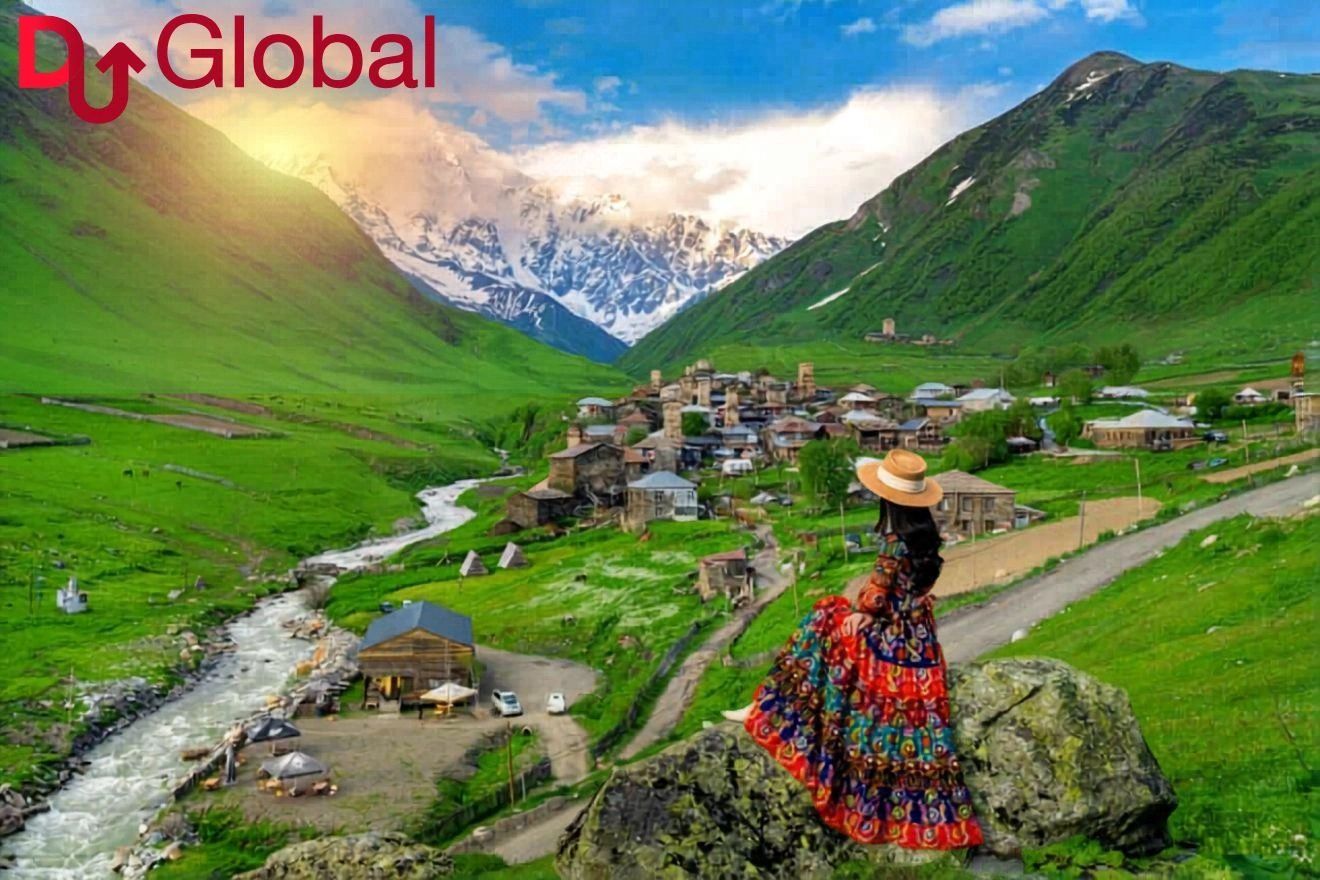
There's a moment, somewhere between your second glass of amber wine and realizing you've been sitting at a family table for three hours without noticing, when Georgia stops being a place you're visiting and becomes a place you're experiencing. It happens faster than you'd expect.
This small country wedged between Russia, Turkey, Armenia, and Azerbaijan has been drawing a quietly devoted following for years. In 2023, more than 7.1 million international visitors showed a dramatic leap from pre-pandemic numbers, with travelers arriving from the Gulf, Europe, and South and Southeast Asia. Word travels fast when a destination earns it.
The appeal is genuinely hard to articulate. Tbilisi looks and feels like nowhere else. The food evolved in something close to isolation for centuries and the result doesn't remind you of anything neighboring.
The wine tradition stretches back 8,000 years and the method fermenting in buried clay pots produces something so different from French or Italian wine that comparisons feel almost beside the point.
The Caucasus mountains in the north are not scenic mountains. They're serious ones. And the hospitality is the kind that makes you feel vaguely guilty about how little effort your home country puts into receiving strangers.
Seven days is enough to get under the skin of this place — not just photograph it and leave.
Can You Actually See Georgia Properly in a Week?
Yes, if you plan it right.
There's more than a week's worth of Georgia worth visiting. The Black Sea city of Batumi, the remote highland region of Svaneti, the ancient cave city of Vardzia none of them make this itinerary, and all of them deserve time. But seven well-structured days covers what most travelers consider the country's heart: the capital, the ancient religious sites, the Caucasus, and the wine country.
The classic mistakes are spending too many days in Tbilisi early on, then rushing to Kazbegi as a long day trip. Both decisions shortchange you. This itinerary doesn't include either of them.
Day 1: Tbilisi, Slowly
The airport sits about 18 kilometers from the center. A taxi to the Old Town runs 30–40 GEL (roughly $11–15 USD), or you can take the metro if you're traveling light. Either way, don't arrive with plans.
Tbilisi's Old Town Dzveli Tbilisi doesn't reward people who walk it purposefully. The streets follow no grid. They narrow, split, bend back on themselves, and open without warning into courtyards that appeared on no map. The best parts of this city are the ones you stumble into. Start at Meidan Square and let the streets make the decisions for a while.
The wooden balconies on the older houses are everywhere, their paint fading in a way that looks considered rather than neglected. Small Orthodox churches sit a few streets from a mosque and a synagogue.
A Persian-era bathhouse appears around a corner. Tbilisi has absorbed centuries of different rulers and faiths without ironing out the contradictions, and the result is a city that feels genuinely lived-in rather than curated.
For dinner, the streets around Erekle II have a good concentration of small restaurants. Order khachapuri bread stuffed with melted cheese, finished with egg and butter pooled in the center and ask what the house wine is. At smaller Georgian restaurants, house wine tends to be local, inexpensive, and often very good.
Then, even if you're exhausted from traveling: the sulfur bathhouses in Abanotubani. This district has operated as a bathing quarter since at least the 5th century, built over natural hot springs that still run hot beneath the domed bathhouse roofs. A private room costs around 10–15 GEL per hour. After a long travel day it's difficult to imagine a better use of an hour.
Day 2: The Full Tbilisi Day
Morning: Narikala Fortress
The fortress has occupied its ridge above the Old Town in various forms since the 4th century. You can hike up through the winding upper streets or take the cable car from Rike Park (2.50 GEL, four minutes, good views before you've even arrived). From the top, Tbilisi finally makes sense as a whole rooftops in every direction, the Mtkvari River cutting through below, mountains visible in the distance behind the city.
Walk down from the fortress to Metekhi Church, which has sat on its cliff above the river since around the 5th century. The cliff is dramatic on its own. The church on top of it makes it more so.
Afternoon: Fabrika
A Soviet sewing factory converted into a courtyard surrounded by around 30 small independent businesses. Coffee shops, natural wine bars, a ceramics studio, vintage clothing, a couple of good restaurants. It works better than a description makes it sound. The crowd is mostly local, the atmosphere is relaxed, and it shows you a completely different register of the city than the medieval streets do. Two hours here passes easily.
Evening: Marjanishvili District
Aghmashenebeli Avenue in the Marjanishvili district sits slightly further from the main tourist concentration, which means the restaurants are better value and the atmosphere is more neighborhood than performance. Walk it, eat well, and stay out late if the city is cooperating — Tbilisi often is.
Day 3: Mtskheta and Jvari
Twenty kilometers northwest of Tbilisi, Mtskheta was the capital of the early Georgian kingdom before Tbilisi took over that role in the 5th century. It's been a UNESCO World Heritage Site since 1994. Today it's a quiet, small town that wears its age well.
Getting there is easy and cheap; a marshrutka from Didube station costs 1 GEL and takes about 40 minutes.
Svetitskhoveli Cathedral is the reason people make the trip. Built in the 11th century on a site considered sacred since Georgia's conversion to Christianity in 337 AD, Georgian Orthodox tradition holds that Christ's robe is buried beneath its foundations; the name translates roughly as "life-giving pillar," tied to that belief. The exterior stonework is unusually detailed and in remarkably good condition given its age. Spend more time with it than you think you need to.
From there, hire a local taxi for the five-kilometer drive up to Jvari Monastery. The road is steep and mostly unpaved; walking isn't worth the effort when the drive costs very little. Jvari dates to the 6th century and is considered a landmark of early Georgian Christian architecture.
But the main event is the view: directly below the monastery, the Mtkvari and Aragvi rivers converge, and the panorama down to that confluence of wide valley, mountains beyond is one of the best in the country.
Head back to Tbilisi for the evening.
Day 4: Kazbegi
Ask anyone who's done a week in Georgia which day they remember most. The answer is usually this one.
Stepantsminda most people still call it by its Soviet-era name, Kazbegi sits 150 kilometers north of Tbilisi through the Greater Caucasus. The drive takes three hours along the Georgian Military Highway, and the road earns your attention. It moves through river gorges, past mountain villages where the stone houses look like they grew from the hillside, and past a monumental Soviet Friendship Monument that appears suddenly on a ridgeline looking completely, magnificently out of place.
Gergeti Trinity Church is what everyone comes for. A 14th-century stone church on a rocky peak at 2,170 meters, with Mount Kazbek a dormant volcano at 5,047 meters rising directly behind it. When the clouds clear and the full picture appears, it tends to silence people for a moment.
The hike up from town takes about 90 minutes at a comfortable pace. You can also hire a 4x4 in town for 50–80 GEL to drive most of the way. Some people hike up and ride down. All approaches are valid.
Stay the night in Kazbegi this is non-negotiable if you want to experience it properly. Guesthouses run 50–100 GEL per night. The mountains in the morning, before the day trippers arrive from Tbilisi, are a genuinely different experience. Quieter, colder, and far more yours.
Day 5: Back to Tbilisi
Take the morning slowly before the three-hour drive south. Arriving back in Tbilisi by midday leaves a useful afternoon.
Deserter's Bazaar, the city's main working market is worth an hour of your time on a day like this. It's not a tourist market. It's where people actually shop: produce, cheese, fresh bread, spices, household goods, and in one corner, a scattered collection of Soviet-era objects that someone thought worth keeping. Loud, busy, and nothing like the Old Town.
For the evening, find a restaurant offering a traditional supra. This is Georgian hospitality in its fullest form a multi-course feast where dishes keep arriving, wine keeps being poured, and a tamada (toastmaster) guides the table through formal toasts covering God, Georgia, honored guests, and the dead.
It sounds ceremonial because it is, but it's also warm and loud and genuinely communal. If there's one Georgian cultural experience worth planning around during the week, this is it.
Day 6: Kakheti Wine Country
About 80 kilometers east of Tbilisi, Kakheti is where Georgia keeps its most ancient habit.
The archaeological evidence for Georgia's claim as the birthplace of wine is solid: 8,000-year-old clay fermentation vessels qvevri were found here, making this the oldest known wine-producing region in the world. The landscape in Kakheti looks exactly as old as it is. Wide flat valley, vines in every direction, ancient monasteries on the hills above.
Most travelers base themselves in Sighnaghi, a compact hilltop town enclosed by old walls with views across the Alazani Valley to the Caucasus range on clear days. It's worth a couple of hours on foot before the day's main purpose: wine.
Skip the larger commercial wineries. Ask your accommodation host to point you toward a family operation — there are plenty, and the experience is categorically different.
You sit down, food appears, and wine gets poured while someone explains how their family has been doing exactly this for generations. The traditional qvevri wine is amber-colored, tannic, and genuinely unlike anything most visitors have encountered. The whole afternoon, including food, usually costs 20–40 GEL per person.
On the way, or the way back, include Alaverdi Monastery — an 11th-century monastery in the valley where monks still produce wine using qvevri. Large, quiet, and unlike anywhere else you'll visit this week. The combination of a functioning monastery and working vineyard feels specific to Georgia in a way that's difficult to explain until you're standing in it.
Stay the night in Sighnaghi. The town changes once the day visitors leave.
Day 7: The Drive Home and Last Hours in Tbilisi
The road back from Sighnaghi to Tbilisi takes about two hours. Before you get on it, stop at the roadside stalls along the Kakheti highway.
They sell churchkhela walnuts threaded on a string, dipped repeatedly in concentrated grape juice until a thick, chewy coating forms around them. They look like dark candles and taste nothing like they look. They also sell local honey and homemade wine. The prices here are significantly lower than what the same products cost in Tbilisi's tourist-facing shops. Buy more than you think you need.
Back in Tbilisi with a few hours to spare before departure, the Dry Bridge flea market runs along the riverbank and sells antiques, Soviet memorabilia, old jewelry, artwork, and objects with ambiguous histories. Nothing is urgent, no one is aggressive, and even without buying anything it's worth walking through slowly.
Practical Notes
Money: Georgia uses the Georgian Lari (GEL). ATMs are easy to find in Tbilisi and most larger towns; cards are widely accepted at hotels and tourist-oriented restaurants. Cash makes life easier at family guesthouses, local restaurants, and wineries. Budget around $50–80 USD per day for comfortable travel including accommodation, food, wine, and local transport. It's possible to do it for less.
Getting Around: Marshrutkas (shared minibuses) connect most destinations cheaply. For Kazbegi and Kakheti specifically, a private driver or rental car gives you significantly more flexibility, costs are still low by any Western standard and split between two or three people, they're negligible.
Language: Georgian script is completely unique there's nothing else like it. English is spoken widely in Tbilisi and at most tourist-facing businesses. In rural areas, Russian is more commonly understood. Learning gamarjoba (hello) and madloba (thank you) takes five minutes and lands well wherever you use them.
Visas: Citizens of more than 90 countries can enter Georgia without a visa for stays of up to 365 days. Check the Georgian Ministry of Foreign Affairs website for the current listYou can apply for a Georgia visa from Du Global as the trusted partner.
When to Go: May–June and September–October are the best months. September and October have the added benefit of the Kakheti grape harvest, which transforms the wine country visit into something even more layered.
August works but Tbilisi gets genuinely hot and the main sites get crowded. Winter is beautiful in the mountains, though road access to Kazbegi can become unreliable when heavy snow hits.
Quick Summary
Day 1 — Arrive Tbilisi, Old Town, sulfur baths, dinner
Day 2 — Narikala Fortress, Metekhi Church, Fabrika, Marjanishvili evening
Day 3 — Mtskheta, Svetitskhoveli Cathedral, Jvari Monastery
Day 4 — Kazbegi, Georgian Military Highway, Gergeti Trinity Church, overnight
Day 5 — Return to Tbilisi, Deserter's Bazaar, traditional supra dinner
Day 6 — Kakheti, Sighnaghi, family winery, Alaverdi Monastery, overnight
Day 7 — Drive back, roadside shopping, Dry Bridge market, departure
Georgia has a way of exceeding what people expected when they booked it. The history goes deeper than most travelers anticipate. The food is more interesting. The wine is unlike anything else available at these prices. The mountains are serious. And the whole week costs less than a long weekend in most Western European cities.
FAQ
How many days do you need in Georgia to see the highlights?
Seven days covers the main things well: Tbilisi, the mountain region around Kazbegi, the ancient capital Mtskheta, and the Kakheti wine country. Anyone wanting to add Batumi or Svaneti should plan for at least 10–12 days. That said, a week in Georgia rarely feels like enough. Most travelers start thinking about a return trip before they've even left.
What's the best time of year to visit Georgia?
September and October are hard to beat. The weather is settled, the grape harvest is happening in Kakheti which adds a whole layer to the wine region visit, and the summer crowds have thinned out. May and June are equally good. August is possible but hot in Tbilisi and busy at the main sites. Winter is worth considering for mountain scenery but requires flexibility around road conditions.
How much does a week in Georgia actually cost?
Less than most people expect. A proper restaurant meal with wine typically comes to 40–50 GEL per person. A good bottle of local wine at a restaurant is around 20–30 GEL. Comfortable guesthouse accommodation outside Tbilisi runs 60–100 GEL per night. The overall daily spend for comfortable travel is low compared to almost any European destination.
Is Georgia safe for travelers?
Georgia is generally considered safe and the country has a strong reputation for hospitality toward foreign visitors. Solo travelers, families, and older travelers all visit regularly without issues. Normal awareness applies as it does anywhere but there are no specific concerns that should put anyone off making the trip.
Also Read:
Book a Free Consultation
Have questions? Fill out the form and our experts will get in touch.

Leave a Reply
Required fields are marked *