
Dubai Visa for Indians Types Fees Apply 2026
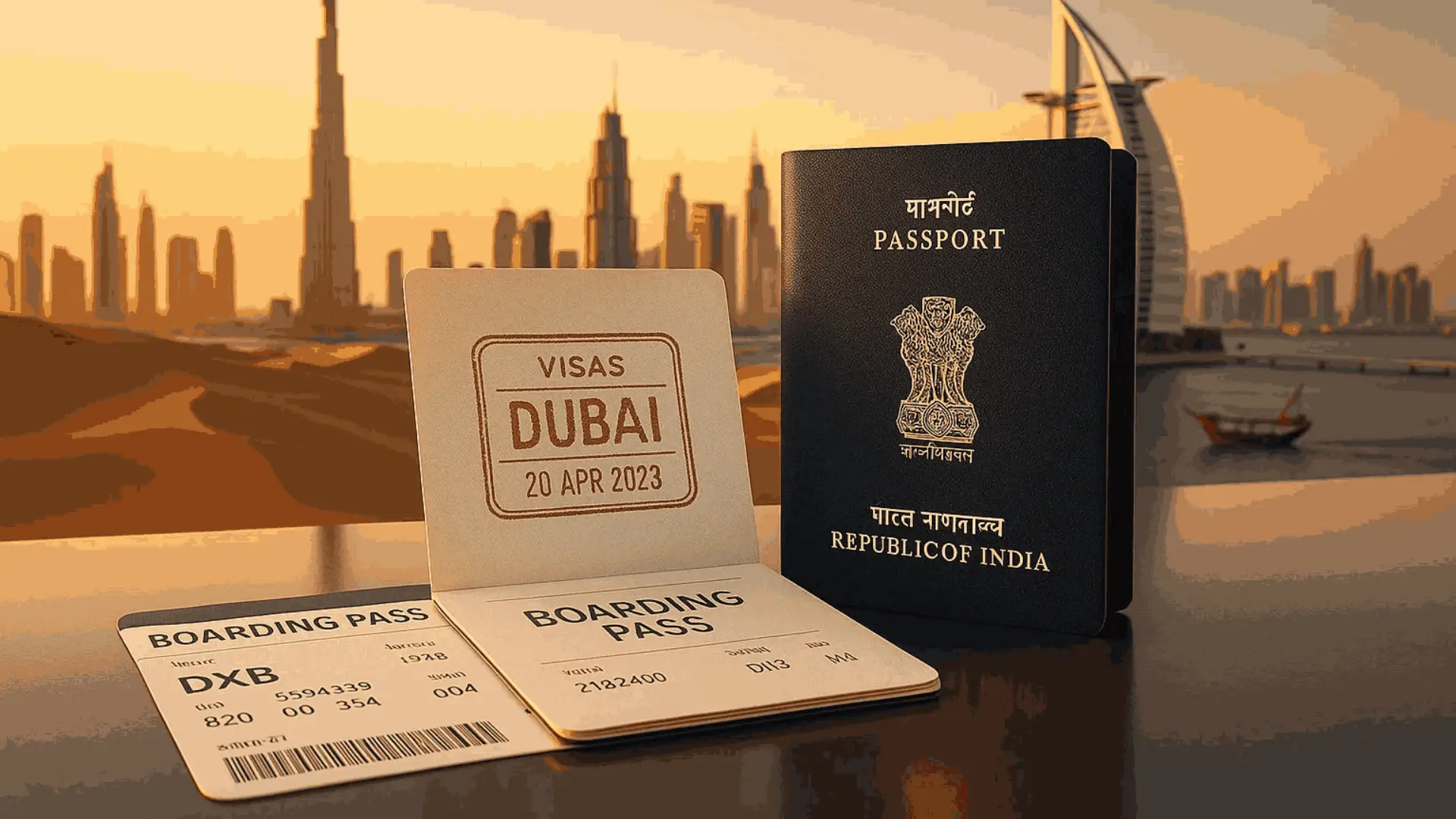
Most Indians travelling to Dubai in 2026 need a visa arranged before they fly. For a normal holiday that means a 30-day or 60-day tourist visa, and the government fee sits between AED 252 and AED 500 with approval usually inside 48 hours. The only travellers who can skip the pre-application are Indian passport holders who already carry a valid US, EU, Canadian or Australian visa or residence permit, who can still collect a visa on arrival at the airport.
That is the short version. The longer version matters, because Dubai has more than one tourist visa, the fees are quoted in dirhams by the UAE authorities and then marked up by whoever you apply through, and one visa-on-arrival rule quietly changed in July 2026. This guide walks through every visa type an Indian tourist actually uses, what each one really costs in AED and rupees, and the exact steps to apply online.
One note on money before we start. The dirham amounts below are the official government fees set by the General Directorate of Residency and Foreigners Affairs (GDRFA) in Dubai. The rupee figures are approximate, worked out at roughly ₹24 to the dirham in mid-2026. The exchange rate moves daily, so treat the rupee numbers as a guide and confirm the live rate before you pay.
Do Indians need a visa for Dubai in 2026?
Yes. Indian passport holders are not on the UAE's visa-free or visa-on-arrival-for-all list, so a plain Indian passport will not get you through Dubai immigration on its own. You either apply for a visa before travel or, if you hold qualifying residency or a visa from certain countries, take a visa on arrival.
Here is the part people miss. A visa on arrival is a privilege tied to your other documents, not your Indian passport. If you hold a valid US visa, a US Green Card, an EU residence permit, or residency from Canada, Australia, Japan, New Zealand, Singapore or South Korea, you qualify for a 14-day visa on arrival at Dubai airport. And in mid-2026 the UAE dropped the UK from that list. A UK visa or UK residence permit alone no longer earns an Indian traveller a visa on arrival, which caught out a lot of Indian students and workers based in Britain. If that is you, apply for a Dubai tourist visa before you board.
Dubai visa types for Indians: fees at a glance
This table covers the visas an Indian tourist or visitor will realistically use. The government fee is fixed. The "all-in price" is what you tend to pay once an airline, hotel or agent adds their service charge and the mandatory UAE medical insurance.
|
Visa Type |
Government Fee (AED, +5% VAT) |
Approx. All-in Price You Pay |
Maximum Stay |
Typical Processing Time |
|
30-day Tourist Visa (Single Entry) |
AED 252 |
₹8,500 – ₹13,000 |
30 days |
48 hours – 4 working days |
|
60-day Tourist Visa (Single Entry) |
AED 352 |
₹14,000 – ₹21,500 |
60 days |
48 hours – 4 working days |
|
30-day Tourist Visa (Multiple Entry) |
AED 300 |
₹18,000 – ₹20,000 |
30 days per entry |
48 hours – 4 working days |
|
60-day Tourist Visa (Multiple Entry) |
AED 500 |
₹38,000 – ₹40,000 |
60 days per entry |
48 hours – 4 working days |
|
5-Year Multiple Entry Visa |
AED 500 issuance + AED 3,000 refundable deposit |
₹17,000 (non-refundable) + refundable deposit |
90 days per visit (maximum 180 days/year) |
48 hours – 4 working days |
|
96-Hour Transit Visa |
AED 50 |
₹1,200 – ₹8,500 |
96 hours |
Same day – 48 hours |
|
48-Hour Transit Visa |
Free |
Airline service fee only |
48 hours |
Same day – 48 hours |
|
Visa on Arrival (Eligible Nationalities) |
AED 100 + VAT |
Approximately ₹2,500 |
14 days |
Issued at the airport counter |
A quick read of that table tells you the story: the government fee is the small part. Most of what you pay is service and insurance, which is exactly why the same 30-day visa can cost ₹8,500 through one channel and ₹13,000 through another.
The Dubai tourist visa: 30-day vs 60-day
The tourist visa is what nearly every Indian holidaymaker gets. It comes in two lengths and two flavours.
The 30-day single-entry visa carries a GDRFA fee of AED 252 plus 5% VAT. It lets you enter Dubai once and stay up to 30 days. Perfect for a one-week or two-week trip with no plan to hop out to Oman or the Maldives and come back.
The 60-day single-entry visa costs AED 352 plus VAT and doubles your stay. Worth it if you are visiting family, combining Dubai with a longer regional trip, or simply want breathing room.
Then there are the multiple-entry versions. A 30-day multiple-entry visa is AED 300, and the 60-day multiple-entry is AED 500, both plus VAT. Each entry resets the clock up to the stated limit. These suit business travellers and anyone planning a Dubai-and-back itinerary within the visa's validity. The catch is the all-in price. Once insurance and service charges load on, a 60-day multiple-entry visa can run close to ₹40,000 through an agent, so only pay for multiple entry if you will genuinely use it.
Processing for all of these is fast. GDRFA lists an expected completion time of 48 hours, though realistically most applications clear in two to four working days once documents are checked.
The 5-year multiple-entry visa: worth it or not?
Dubai's 5-year multiple-entry tourist visa is the one that confuses people on price, so let's be precise. GDRFA charges an application fee of AED 100 and an issuance fee of AED 500, plus small knowledge and innovation dirham fees and a service charge. There is also a refundable financial guarantee of AED 3,000. Add it up and the portal shows a total near AED 3,713, but around AED 3,000 of that is a deposit you get back when you leave within your permitted days. The real, non-refundable cost is roughly AED 713, or about ₹17,000.
For that you get five years of validity, unlimited entries, and up to 90 days of stay per visit, extendable once by another 90 days, capped at 180 days inside the UAE per year. No UAE sponsor or host is needed, which is unusual.
So who should buy it? The five-year visa only pays off if you visit Dubai more than once. Do the math. A 60-day multiple-entry visa costs roughly AED 700 all-in each time. Two trips a year and you have already matched the five-year visa's net cost, minus the deposit you tie up. If Dubai is a once-in-a-while holiday, stick with a single tourist visa. If you go every few months for work, family or shopping, the five-year visa is a sensible buy. You will need a six-month bank statement showing a balance of at least USD 4,000, valid health insurance and a return ticket to qualify. DU Global handles this application end to end through its UAE 5-year tourist visa service.
Transit visa: for a Dubai stopover
Flying through Dubai on the way somewhere else? You may not need a full tourist visa. The UAE issues two transit visas, both sponsored by UAE-based airlines rather than applied for directly.
The 48-hour transit visa is free. The government charges nothing; you only cover whatever small service fee the airline adds. The 96-hour transit visa costs AED 50 plus the airline's mediator fee, and lets you leave the airport and see the city for up to four days between connecting flights.
To qualify, your layover has to be at least 8 hours, you need a confirmed onward ticket to a destination different from where you arrived, and your passport must have at least six months' validity. You apply through the airline handling your transit, most often Emirates, flydubai or dnata. This is the cheapest legal way to step out and see Burj Khalifa on a long layover.
Visa on arrival: who actually qualifies in 2026
Visa on arrival is the quickest route, but it is only open to a specific group of Indian travellers. You qualify if you are an Indian passport holder who also holds a valid visa, residence permit or Green Card from the United States, an EU member state, Australia, Canada, Japan, New Zealand, Singapore or South Korea. Show it at the Dubai airport counter, pay AED 100 plus VAT, and you get a 14-day entry.
The 2026 change is the important footnote. Until this year, a UK visa or UK residence permit also qualified. As of July 2026 it does not. If your only supporting document is British, you now need a tourist visa arranged before departure. Immigration rules shift, so if you are relying on a foreign visa to get your visa on arrival, confirm your document is still on the accepted list on the official ICP or GDRFA portal before you fly. Getting turned back at check-in is an expensive way to learn the rule changed.
How to apply for a Dubai visa online
Applying for a Dubai visa online is straightforward once your documents are ready. The broad steps are the same whichever channel you use:
1. Pick your visa type and length (30-day, 60-day, single or multiple entry).
2. Fill in the application form with your passport details exactly as printed.
3. Upload a passport scan with at least six months' validity, a recent passport-size photo on a white background, and your return ticket.
4. Add valid UAE medical insurance if your provider does not bundle it.
5. Pay the fee online.
6. Receive your e-visa by email, usually in two to four working days. Print a copy and carry it.
Small mistakes cause most rejections: a name spelled differently from the passport, a blurry photo, or a passport with under six months left. Check twice before you submit. If you want a ready reference for what to prepare, DU Global's Dubai visa document checklist lays out exactly what each visa type needs.
Documents you'll need
Keep these ready before you start:
- Passport valid at least six months from your travel date, machine-readable (handwritten passports are not accepted).
- One recent colour photo, white background.
- Confirmed return or onward air ticket.
- Valid medical insurance covering your UAE stay.
- For the 5-year visa: a six-month bank statement showing a USD 4,000 balance.
- For a visa on arrival: your qualifying US, EU, Canadian or Australian visa or residence permit.
The passport validity and insurance conditions are UAE terms and conditions, not agent add-ons, so there is no getting around them.
Who should you apply through: airline, hotel, GDRFA or agent?
Four channels can issue your Dubai visa, and the right one depends on your trip.
Apply through your airline if you are flying Emirates, flydubai or Air India and booking a straightforward tourist trip. Eligible Indians can apply on emirates.com through "Manage your booking," which routes to the official UAE visa platform run by VFS Global. Convenient, and tied to your ticket.
Apply through your hotel if you have booked a stay that includes visa sponsorship; some Dubai hotels arrange it as part of the package.
Apply directly to GDRFA through the smart services portal if you are comfortable doing the paperwork yourself and want to pay only the government fee. It is the cheapest route, but you handle every step, including the insurance, and there is no one to fix a mistake.
Apply through a visa facilitation company if you want the documents checked, the insurance sorted, and someone accountable if something goes wrong. This is where a specialist earns its fee, especially for the 5-year visa or a family application with several passports. You can apply for your Dubai visa online through DU Global and have the whole file handled, or use the same team for other destinations from the apply for any visa desk.
How much does a Dubai visa cost for Indians in 2026?
The government fee is AED 252 for a 30-day tourist visa and AED 352 for 60 days, plus 5% VAT. Once an airline or agent adds service and insurance, expect to pay roughly ₹8,500 to ₹13,000 for a 30-day visa and ₹14,000 to ₹21,500 for 60 days.
How long does it take to get a Dubai tourist visa?
GDRFA lists 48 hours as the expected processing time. In practice most e-visas arrive in two to four working days once documents are verified. Express services can turn some visas around in about 24 hours.
Can Indians get a visa on arrival in Dubai?
Only if you hold a valid visa, residence permit or Green Card from the US, an EU country, Canada, Australia, Japan, New Zealand, Singapore or South Korea. As of July 2026 a UK visa alone no longer qualifies. Everyone else applies before traveling.
Is the 5-year Dubai visa worth it for Indians?
It pays off if you visit more than once. The non-refundable cost is about AED 713 (₹17,000) plus a refundable AED 3,000 deposit, against roughly AED 700 every time you buy a fresh 60-day multiple-entry visa. Two or more trips a year and it makes sense.
Do I need a visa for a Dubai stopover?
Not always. A 48-hour transit visa is free and a 96-hour transit visa costs AED 50, both arranged through your airline, as long as your layover is at least 8 hours with a confirmed onward ticket.
How long must my passport be valid?
At least six months from your date of travel, for every Dubai visa type. Handwritten passports are not accepted.
Planning a Dubai trip? Start with the right visa
Here is the honest recommendation. If you are taking one holiday, buy a 30-day or 60-day single-entry tourist visa and don't overpay for multiple entry you won't use. If Dubai is a regular fixture in your calendar, the 5-year multiple-entry visa is the better long-term value. And if you hold a US, EU, Canadian or Australian visa, check whether a visa on arrival saves you the whole exercise, keeping the July 2026 UK change in mind.
Whichever fits, the paperwork rewards care more than speed. Get your passport validity, photo and insurance right, and approval is quick and dull, which is exactly how a visa should be. DU Global processes Dubai and UAE visas for Indian travellers with the documents checked and the file handled end to end. Start your application, or ask the team which visa fits your trip, before you book those flights.
Book a Free Consultation
Have questions? Fill out the form and our experts will get in touch.

Leave a Reply
Required fields are marked *