
UAE 5-Year Multiple Entry Visa: Common Mistakes That Can Lead to Rejection
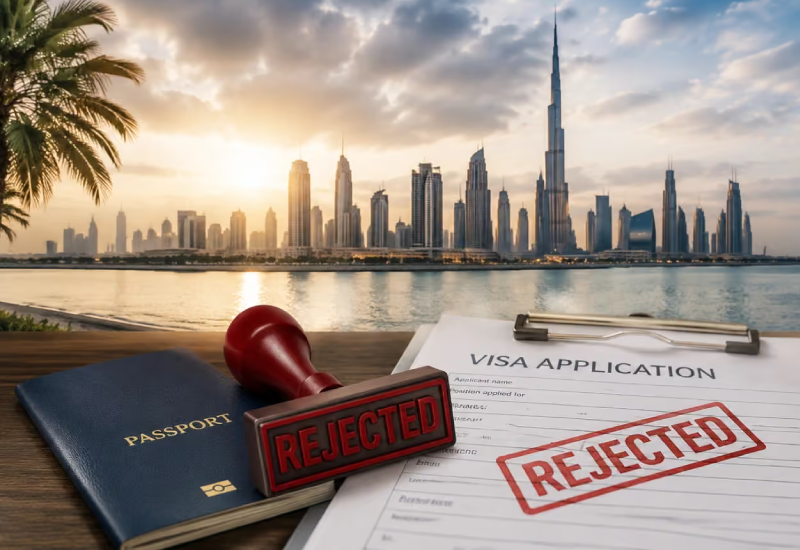
Most people refused this visa qualified for it.
That sounds like a contradiction until you look at what actually goes wrong. The criteria are short and public. There's no interview, no minimum salary, no requirement to have visited the UAE before. Meet six conditions and you're eligible.
And yet applications fail steadily, almost always for reasons that had nothing to do with whether the applicant deserved the visa. A statement funded eight weeks too late. A scan missing its second page. A file submitted three times in a hurry, which is the exact number the system allows before it closes the application for good.
These are the mistakes that do the damage, grouped by when they happen, with what to do instead.
Mistakes made before you apply
1. Applying before your bank statement is ready
This is the single biggest cause of refusal, and the most avoidable.
The requirement is a balance of USD 4,000, roughly ₹3.79 lakh, maintained across the six months before you apply. The word carrying the weight is maintained. Reviewers are not checking whether the money is there today. They're checking whether it has been there.
Borrowing the amount, parking it for three weeks and submitting the statement produces exactly the pattern that gets flagged.
The fix: Work out when your balance was actually funded, count six months forward from that date, and apply after it. If that means waiting until March, wait until March. A delayed application beats a refusal on your record.
2. Applying too far ahead of your trip
A strange one, because it punishes people for being organised.
The permit is valid for 60 days from the date of issuance, and you must enter the UAE within that window or it's cancelled. Approval usually arrives inside 48 hours. Apply in January for a trip in May and your visa expires before you use it, along with the money you paid for it.
The fix: Apply two to three weeks before departure. Close enough that the 60-day window comfortably covers your travel date, far enough to absorb a returned document without touching your flights.
3. Ignoring your passport expiry date
Six months of validity is the requirement, and it's checked before anything else. Under that, the application fails on a technicality regardless of how strong the rest of it is.
The fix: Check the expiry date first, before you gather a single document. Passport renewal takes longer than fixing any other item on the list, so it needs to be at the front of the queue, not the back.
4. Buying insurance that doesn't meet the condition
Two things trip people here. The policy has to be valid inside the UAE, and ICP specifies a validity period of 180 days. A domestic travel policy, or one that only covers your two-week trip, doesn't satisfy either.
The fix: Confirm both points with your insurer in writing before you buy, and check the certificate names the UAE explicitly.
Not sure when you're actually eligible to apply? Tell DU Global when your account balance was funded and we'll tell you the earliest date your statement will clear the six-month rule.
Mistakes made during the application
5. Submitting a file you already know is incomplete
This is where good applications die, and it's worth understanding the mechanics.
An incomplete file isn't rejected. It's returned to you for correction. Two rules then apply, and both are unforgiving:
• You have 30 days from the return date to supply what's missing. Miss it and the application is rejected automatically.
• If the file is returned three times for incomplete information or documents, it's rejected outright.
Submitting early to get the process moving feels productive. In practice it spends one of three attempts on a file you knew wasn't ready.
The fix: Treat the submission as the last step, not the first. Assemble everything, check it against the requirement list once, then file.
6. Letting a returned application sit in your inbox
The 30-day clock starts when the file is returned, not when you notice. If the notification lands in a spam folder or an unused email address, the deadline runs anyway.
The fix: Use an email address you check daily, note your reference number, and check your application status on the ICP or GDRFA portal every few days.
7. Name spellings that don't match your passport
Passport, application form, bank statement, insurance certificate and ticket all need to carry the same name, spelled identically. Middle names dropped on one document and present on another, or an initial where the passport shows a full name, are enough to send a file back.
The fix: Open your passport and copy from it character by character. Don't type from memory, and don't assume the spelling your bank uses matches.
8. Documents nobody can read
Cropped scans, a page photographed at an angle, a statement missing its final page, or a bank statement that isn't in English. Each is a return, and each costs you an attempt and a fortnight.
The fix: Scan rather than photograph, check every page is present and legible at full size, and make sure statements are bank-stamped or carry a verifiable digital signature.
Documents in the wrong format are the most common reason files get sent back. DU Global will format and verify your paperwork before submission, so your one attempt is a clean one.
Mistakes made after approval
9. Assuming your visa year runs from January
Approval isn't the end of the risk. The rule that catches people afterwards is when their year starts.
Your 180-day annual allowance runs from the date of your first entry into the UAE, not from 1 January. Land first on 12 March and your year runs to 11 March. Plan on a calendar reset and you can be 90 days over without realising it.
The fix: Write down your first entry date the day you arrive and treat it as your visa anniversary. Log every arrival and departure after that.
10. Treating the AED 3,000 as spent money
Two opposite errors here, and both cost.
Some applicants see AED 3,713 and abandon the idea, not realising AED 3,000 of it is a refundable financial guarantee. Others treat it as gone and get careless, which is worse. GDRFA states that in the event of a violation, fines are collected at the departure port and the security amount is forfeited.
The fix: Budget for the full amount upfront, then protect the deposit by staying inside your permitted days. It's your money for as long as you follow the rules.
If you've already been refused
One piece of good news first. Deposit refunds apply in cases of cancellation, expiry and rejection, so a refusal doesn't mean the AED 3,000 is lost. Refunds inside 180 days go back to the original card beyond that they're issued by cheque or UAE bank transfer, claimable for up to five years.
The harder part is knowing what to fix. You'll usually be told the reason, but the authority reserves the right not to disclose it in some cases. Reapplying blind with the same documents tends to produce the same outcome, and a second refusal makes the third attempt harder.
Identify the weakness, fix it properly, and only then reapply.
Ready to apply? DU Global handles the UAE 5-year multiple entry visa from documents to approval.
Related guides
FAQs
What is the most common reason this visa is rejected?
Bank statements that don't show the USD 4,000 balance held across the full six months before the application.
How many times can my application be returned?
Three. On the third return for incomplete information, the application is rejected outright.
Do I lose my money if I'm rejected?
The AED 3,000 financial guarantee is refundable in cases of rejection, cancellation or expiry. Refund timelines and method depend on how long has passed.
Can I reapply immediately after a refusal?
You can, but reapplying without addressing what failed usually repeats the result. Fix the cause first.
Will a refusal affect future UAE applications?
Your immigration history follows you into subsequent applications, which is why a considered second attempt beats a fast one.
Before you submit
Requirements and fees published by ICP and GDRFA change without notice. Everything here reflects current published guidance, so check both portals on the day you apply.
You get three attempts. Most people only need one, if the file is right before it goes in. Have DU Global check yours against the current requirements first.
Book a Free Consultation
Have questions? Fill out the form and our experts will get in touch.
Related Posts

Georgia Visa Rejection: Common Reasons & How Indian Applicants Can Avoid Them

Georgia Visa Cost for Indians: Fees, Processing Charges & Other Expenses

Georgia Tourist Visa for Indians: Eligibility, Documents & Processing Time

How to Apply for a Georgia Visa from India: Step-by-Step Guide
Can Indians Travel to the UAE Multiple Times on a 5-Year Visa?



Leave a Reply
Required fields are marked *